
Weaponize Your Brain: The Neurodivergent “Superpower” Protocol
The corporate world was built by neurotypicals, for neurotypicals. It worships linear thinking, 9-to-5 consistency, and polite small talk.
If you have ADHD or Autism, this world wasn’t built for you. It was built to filter you out.
For decades, the advice for neurodivergent professionals has been to “mask.” To hide. To pretend to be “normal.” To smile when you’re overwhelmed, to sit still when you need to move, to speak vaguely when you want precision.
That advice is dead.
In the AI-driven economy of 2026, “normal” is being automated. The “Generalist” who follows rules, colors inside the lines, and churns out average work is the first to be replaced by an LLM.
The market no longer rewards compliance. It rewards outliers.
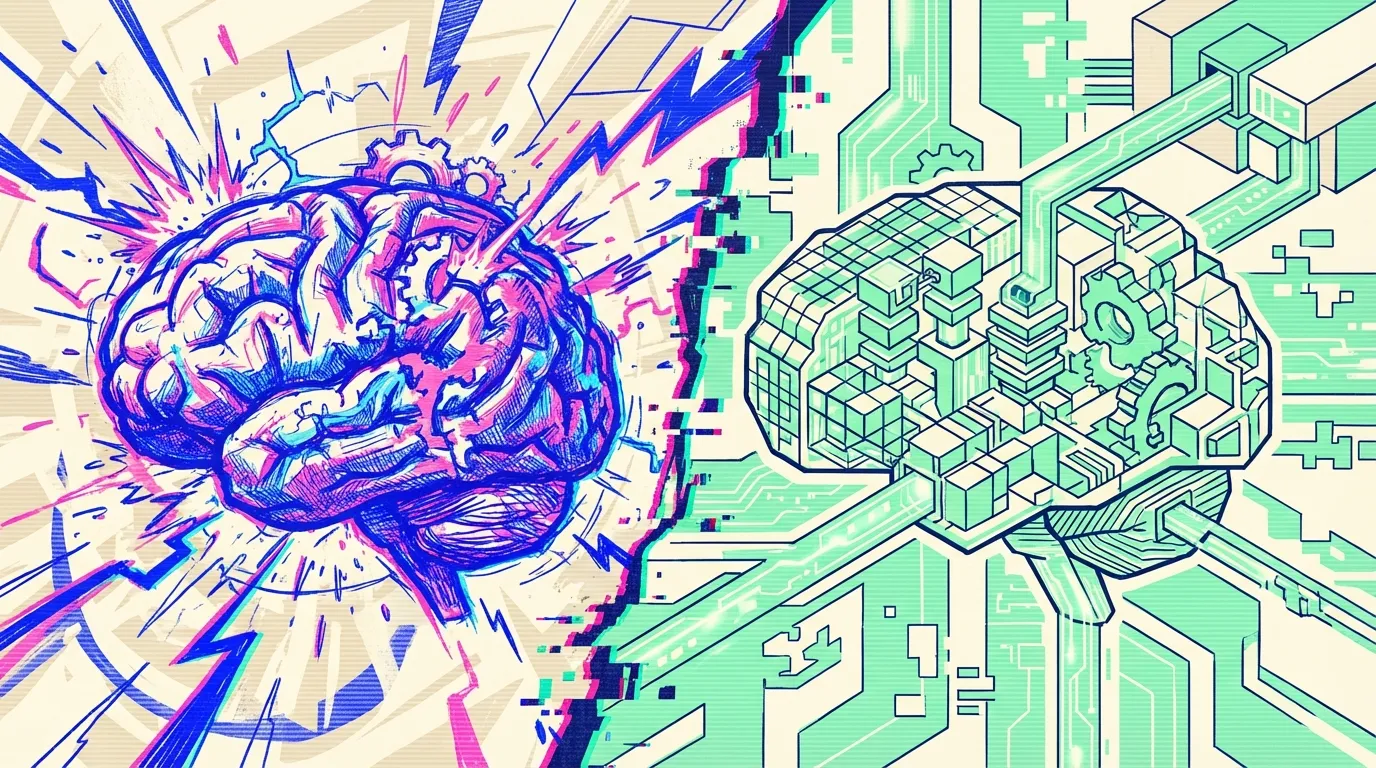
It rewards the Hunter (ADHD) who thrives in chaos and sprints when others crawl. It rewards the Architect (Autism) who sees patterns invisible to the average eye and builds systems that don’t break.
Your brain is not a liability. It is a high-performance engine that requires a specific fuel mix. Stop apologizing for it and start charging a premium for it.
The Economics of Neurodiversity (Why HBR is on Your Side)
This isn’t just “feel-good” affirmation. This is cold, hard capitalism.
Research from the Harvard Business Review confirms that neurodiverse teams can be 30% more productive than their neurotypical counterparts. Companies like SAP, Microsoft, and EY aren’t hiring neurodivergent talent out of charity; they are doing it because it improves their bottom line.
Why? Because innovation requires divergent thinking.
- Groupthink kills companies. Neurotypical brains are wired for social cohesion—they often agree to get along. They prioritize the “vibe” over the “truth.”
- Divergent brains are wired for optimization. They don’t care about the hierarchy; they care about the solution.
In a volatile market, the person who can spot the anomaly (Autism) or pivot instantly (ADHD) is worth 10x the person who just follows the process.
The ADHD Protocol: The “Hunter” Phenotype
If you have ADHD, you don’t have a “deficit of attention.” You have an abundance of attention that is regulated by interest, not obligation.
You are a Hunter in a farmer’s world.
Farmers (Neurotypical) are great at slow, consistent, repetitive tasks. They can plant seeds and watch them grow for 6 months without getting bored. They thrive on routine.
Hunters (ADHD) are built for the hunt. They scan the environment constantly. They burst into action with explosive energy when the prey (the problem) appears. They solve it, feast, and then rest.
If you force a Hunter to farm, they will fail. If you let a Hunter hunt, they will feed the village.
Your Assets:
- Hyperfocus (Flow State on Demand): When you are engaged, you can do 8 hours of work in 2 hours. This is your “Sprint Capacity.” While others are pacing themselves, you are lapping them.
- Crisis Management: Your brain craves dopamine. High-pressure situations that paralyze others actually calm you down. You are built for the fire. You are the one who steps up when the server crashes or the deal falls through.
- Rapid Iteration: You don’t get stuck in “analysis paralysis.” You try, fail, fix, and try again faster than anyone else. You learn by doing.
The Resume Translation Layer:
Do not put “ADHD” on your resume. It is a medical diagnosis, not a skill. Translate the symptoms into Mercenary Skills.
| Symptom (Don’t Say) | Skill (Say This) |
|---|---|
| “I get bored easily.” | “Rapid Prototyping & Iteration Specialist” |
| “I’m impulsive.” | “Bias for Action / Agile Methodology” |
| “I hyperfocus and lose track of time.” | “Deep Work Protocol / Sprint-Based Execution” |
| “I’m good in a crisis.” | “Critical Incident Response Lead” |
| “I jump between tasks.” | “Cross-Functional Multitasking / Dynamic Resource Allocation” |
Pro Tip: If you struggle with the “9-to-5” grind, look at our guide on Remote Work Autonomy. Remote work allows you to leverage your “Sprint Capacity” without being punished for not “looking busy” during your rest periods.
The Autistic Protocol: The “Architect” Phenotype
If you are Autistic, your brain is a Systemizer. You don’t just see the surface; you see the underlying code, the structure, and the logic.
While others are navigating office politics (“How was your weekend?”, “Did you see the game?”), you are navigating the actual work. You are seeing the inefficiencies that bleed profit.
Your Assets:
- Pattern Recognition: You can spot anomalies, errors, and inefficiencies that 99% of people miss. This makes you elite at QA, Cybersecurity, Data Analysis, and Law.
- Logical Integrity: You are immune to “because we’ve always done it this way.” You judge ideas on merit, not status. You are the ultimate auditor.
- Deep Expertise: When you commit to a topic, you don’t just learn it; you master it. You become the subject matter expert that the entire company relies on. Your “special interest” is their “competitive advantage.”
The Resume Translation Layer:
Again, translation is key. You are not “socially awkward”; you are “data-driven.” You are not “rigid”; you are “principled.”
| Symptom (Don’t Say) | Skill (Say This) |
|---|---|
| “I’m obsessive about details.” | “Forensic Auditing & Quality Assurance” |
| “I don’t like small talk.” | “High-Efficiency Communication Protocol” |
| “I need routine.” | “Process Optimization & Standardization” |
| “I’m blunt.” | “Radical Candor / Objectivity-First Leadership” |
| “I notice everything.” | “Advanced Anomaly Detection” |
Pro Tip: Use your “Special Interests” as evidence of mastery. If you have spent 5,000 hours analyzing supply chain logistics for fun, that isn’t a hobby; that is Professional Experience. Frame it as a “Personal Research Project” or “Independent Consultancy.”
The “Interview” Minefield: How to Handle the “Weakness” Question
The interview is the most dangerous part of the process for neurodivergent candidates. It is a social test, not a skills test.
When they ask, “What is your biggest weakness?”, they are setting a trap. Do not walk into it.
The Wrong Answer: “I have ADHD, so sometimes I miss deadlines or forget emails.” (Result: You are flagged as a liability.)
The Mercenary Answer: “I thrive in high-velocity, high-complexity environments. If I am placed in a slow, repetitive role without clear goals, I will automate it to reclaim efficiency. I am not built for maintenance; I am built for growth and optimization.”
Why this works:
- It admits a “weakness” (you don’t like boring work).
- It frames it as a strength (you automate and optimize).
- It filters out bad employers (if they want a robot, you don’t want to work there).
The Tooling Stack: The “External Cortex”
Your brain is a Ferrari engine with bicycle brakes. You need better brakes and a better steering wheel. Do not rely on “willpower.” rely on systems.
We call this building your External Cortex.
- The Time Machine (Calendar): If it is not on the calendar, it does not exist. Block out everything. “Deep Work,” “Email Triage,” and even “Rest.” Defend these blocks like a fortress.
- The RAM Expansion (Obsidian / Notion): Your working memory is volatile. Dump everything into a “Second Brain” immediately. Do not try to “remember” anything. Capture it. Search it later.
- The Shield (Noise Cancellation): Your sensory input is higher than average. You hear the lights buzzing. You hear the conversation three rows away. Invest in elite noise-canceling headphones. This is not a luxury; it is PPE (Personal Protective Equipment).
The “Burnout” Defense and The Tax of Masking
The biggest risk for neurodivergent professionals is burnout. The “Sprint” nature of ADHD and the “Sensory Load” of Autism can lead to crashes.
This is often caused by Masking—the exhausting effort of pretending to be neurotypical. It burns 40% of your energy before you even write a line of code.
This often creates Employment Gaps.
Do not apologize for these gaps. Frame them as Strategic Maintenance.
- The Narrative: “After delivering [Project X] ahead of schedule, I took a planned sabbatical to upskill in [New Tech] and reset for the next high-intensity cycle.”
- The Truth: You needed to sleep for a month because masking for 2 years destroyed your nervous system.
Both are true. One gets you hired.
Conclusion: Stop Playing Their Game
You will never win at being a “Farmer.” You will never be the best at sitting still, being quiet, and doing repetitive tasks for 40 years.
Don’t try.
Lean into your jagged edges. Find the roles that require intensity, precision, and divergence.
- If you have ADHD, look for startups, emergency medicine, high-ticket sales, or incident response. Look for roles where every day is different.
- If you are Autistic, look for cybersecurity, engineering, law, compliance, or research. Look for roles where “being right” matters more than “being liked.”
The market pays for value, not conformity. Your brain is an asset. It is time you started treating it like one.
FAQ
Should I disclose ADHD or Autism on my resume?
Generally, no. Your medical history is private. Instead, disclose the strengths associated with your neurotype. List 'Deep Work Protocol' instead of 'Hyperfocus' and 'Systems Architecture' instead of 'Pattern Recognition'.
What are the career strengths of ADHD?
ADHD brains excel in crisis management, rapid iteration, and creative divergence. They perform best in high-stimulation environments where 'chaos' would paralyze a neurotypical worker.
What are the career strengths of Autism?
Autistic brains often possess superior pattern recognition, logical reasoning, and an immunity to groupthink. They are elite at auditing complex systems and identifying anomalies that others miss.
How do I explain employment gaps due to burnout?
Frame them as 'Planned Sabbaticals' or 'Upskilling Periods.' Focus on the skills you acquired or the projects you built during that time, not the health reason for the break.